


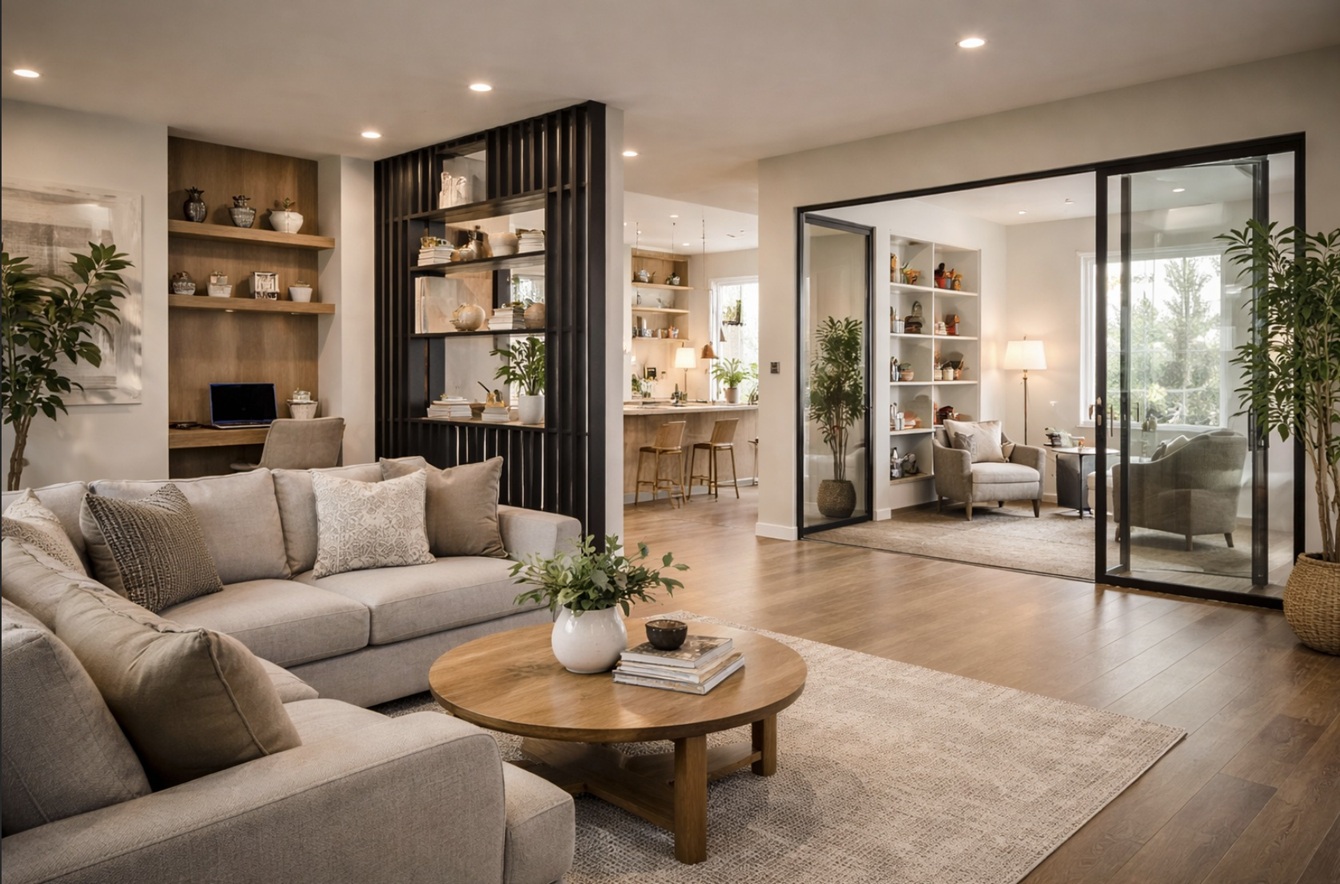
For years, open-concept layouts defined modern homes, removing walls to create spacious, connected environments. While this design improved flow and social interaction, many homeowners are now realizing its limitations. In today’s lifestyle where working from home, relaxing, and entertaining all happen under one roof there’s a growing need for balance. This is where Zoned Living comes in, offering a smarter way to design spaces that feel open yet functional.
Zoned Living focuses on creating defined areas within an open layout without fully closing off spaces. Instead of traditional walls, homeowners are using architectural elements like partial dividers, sliding doors, and custom built-ins to subtly separate environments. This approach maintains visual openness while giving each space a clear purpose, improving both usability and comfort.
One of the biggest drivers behind this shift is the need for better Noise Control. Open spaces can amplify sound, making it difficult to concentrate, relax, or hold conversations. By introducing soft boundaries such as shelving units, acoustic panels, or strategic layouts homes can reduce noise without sacrificing design. This is especially important for families balancing work, school, and daily life.
Design plays a critical role in making these zones feel cohesive rather than fragmented. Consistent materials, color palettes, and lighting help tie each area together while still allowing them to function independently. For example, a living room can flow seamlessly into a workspace, yet feel distinctly separate through furniture placement and subtle structural elements.
Flexibility is another key advantage of this approach. Homes designed with zones can easily adapt to changing needs, whether it’s adding a home office, creating a quiet reading corner, or defining a play area for children. Instead of rigid layouts, homeowners gain spaces that evolve with their lifestyle, making the home more future-proof.
Lighting and layout planning also enhance the effectiveness of zoned spaces. Natural light can be directed to highlight specific areas, while layered lighting solutions help define moods within each zone. Thoughtful placement of windows, fixtures, and partitions ensures that every part of the home feels intentional and well-designed.
Ultimately, the shift from open concept to Zoned Living reflects a deeper understanding of how people truly use their homes today. It’s not about choosing between openness and privacy it’s about achieving both. With the right design strategy, homeowners can enjoy a space that feels connected, comfortable, and perfectly tailored to modern living.