


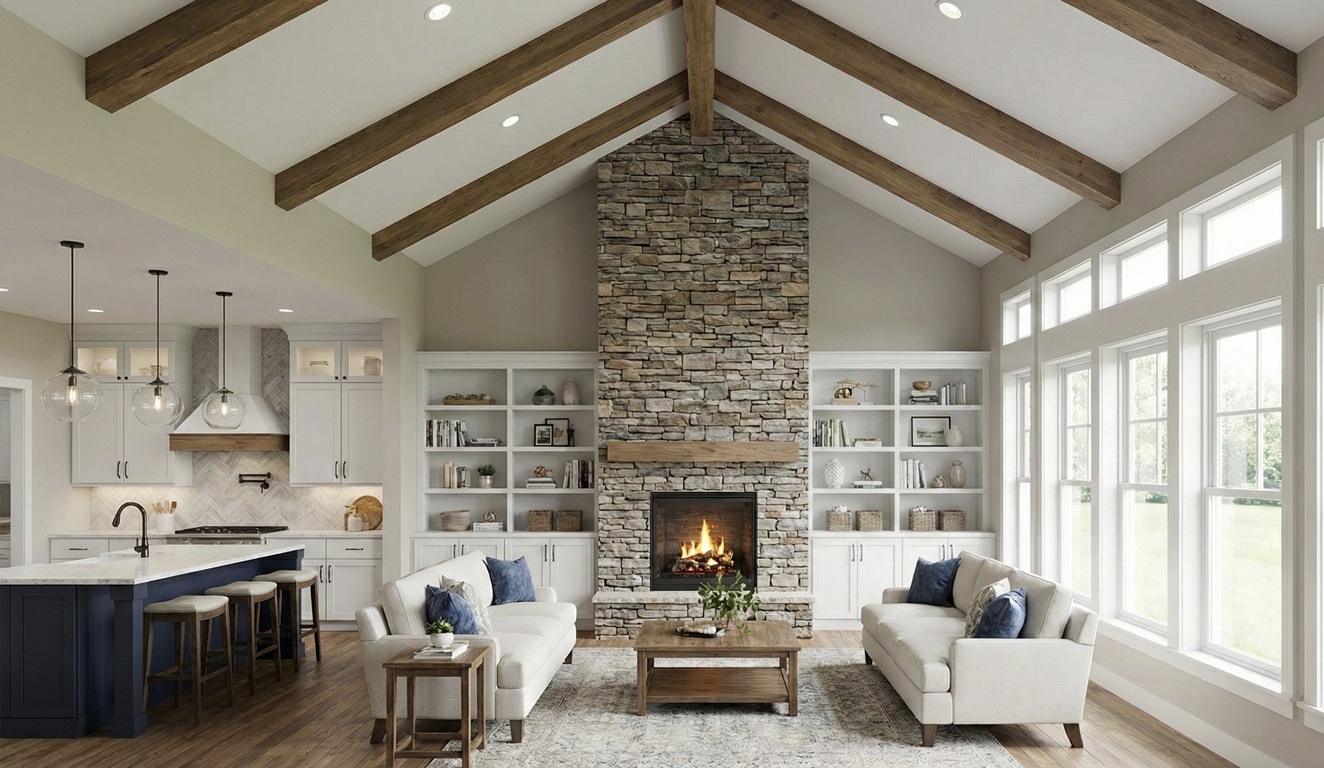
Ceiling beams have become one of the most sought-after design features for homeowners looking to add warmth, character, and architectural interest to their spaces. But with so many options available, one of the most common questions is whether to invest in real wood beams or choose modern faux alternatives. This expert comparison will help you understand the key differences, benefits, and considerations when evaluating faux beams vs real wood for your home.
- Material Differences and Structural Impact
Real wood beams are crafted from solid timber, giving them unmatched authenticity, natural grain patterns, and inherent strength. They can be structural (supporting the weight of the home) or purely decorative, depending on the project.
Faux beams, on the other hand, are typically made from high-density polyurethane or lightweight composite materials. Although they mimic the texture and look of wood, they are hollow and non-structural. This makes them easier to install and ideal for remodeling projects where adding heavy beams would be impractical.
Understanding these material distinctions is the first step in comparing faux beams vs real wood options.
- Installation Considerations
Real wood beams are significantly heavier, which means installation requires professional carpentry skills, secure anchoring, and sometimes additional structural reinforcements. This can increase both project time and labor cost.
Faux beams, being lightweight, can often be installed with basic mounting blocks and screws. They are especially convenient for vaulted ceilings, large rooms, or retrofits in existing homes. Homeowners can achieve a dramatic transformation without major construction work, which is one of the reasons faux beams are so popular today.
- Aesthetic Differences
Visually, both options can achieve impressive results. Real wood beams offer organic variation in grain, natural imperfections, and a sense of age that’s difficult to replicate. They are ideal for homes aiming for a rustic, traditional, or farmhouse aesthetic.
Faux beams are engineered to imitate real wood textures, and high-quality products can look incredibly realistic once installed. They also come in a wide range of colors, finishes, and styles. Offering more control over uniformity and tone.
The best choice depends on whether you value the authenticity of timber or the design flexibility of composites.
- Maintenance and Durability
Real wood requires ongoing care, including sealing, staining, and protection from humidity and pests. Over time, it may develop cracks or warping, which some homeowners consider part of the charm, but others may see as a drawback.
Faux beams are resistant to moisture, insects, and temperature fluctuations. They retain their appearance with minimal maintenance, making them a long-lasting option for kitchens, bathrooms, and high-humidity environments where real wood might struggle.
- Cost Comparison
Because of the weight, installation complexity, and material itself, real wood beams tend to be significantly more expensive. The cost includes not only the beam but also professional installation and potential structural upgrades.
Faux beams offer a more budget-friendly alternative without sacrificing visual impact. They provide the look of timber at a fraction of the cost, especially for large spaces or multi-beam designs.
- Which Option Is Right for You?
Choosing between faux beams vs real wood ultimately comes down to your priorities:
- Authenticity and structural needs → Real wood
- Ease of installation and lower cost → Faux beams
- Low maintenance and versatility → Faux beams
- Timeless, natural character → Real wood
Both options can elevate the design of your home; the key is selecting the one that aligns with your goals, budget, and long-term expectations.
📞 Contact Plethora Installs at 737-333-2472
📧 info@plethorainstalls.com